Artificial Intelligence (AI) is no longer just a futuristic technology. It has evolved from being a tool used primarily by software companies to becoming an essential part of everyday life. Today, AI is helping individuals, startups, large enterprises, IT companies, banks, hospitals, educational institutions, and even small businesses work faster, smarter, and more efficiently.
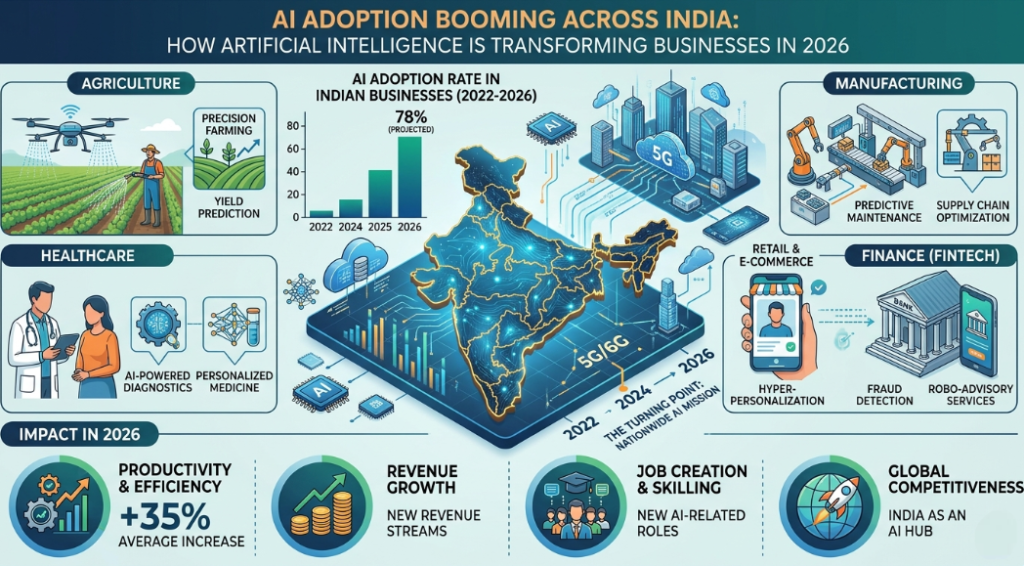
In 2026, AI adoption in India has reached unprecedented levels. Experts believe that AI is driving the next major phase of India’s digital transformation. Recent reports indicate that more than 59% of Indian enterprises and small-to-medium businesses (SMBs) are actively using AI in production environments, highlighting the growing importance of this technology across industries.
AI Usage Is Growing Rapidly in India
Over the past few years, AI-powered tools such as ChatGPT, Google Gemini, Microsoft Copilot, and various automation platforms have completely changed the way people work. Businesses are now using AI for customer support, social media management, marketing, content creation, software development, project management, coding, research, and data analysis.
Tasks that previously required hours of manual effort can now be completed within minutes. AI-powered systems can operate 24/7 without fatigue, helping businesses automate repetitive processes and improve overall efficiency.
As a result, organizations are achieving higher productivity, reducing operational costs, and delivering better customer experiences.
Sectors Where AI Is Making the Biggest Impact
1. Information Technology (IT)
The IT industry is one of the largest adopters of AI in India. Companies are integrating AI into software development, testing, cybersecurity, customer support, and workflow automation. AI-powered coding assistants are helping developers write code faster and improve productivity.
2. Banking & Finance
Banks and financial institutions are leveraging AI for fraud detection, risk assessment, customer service, and financial analysis. AI systems can monitor transactions in real time and identify suspicious activities before they become serious threats.
3. Healthcare
Hospitals and healthcare providers are using AI to simplify patient management, support medical diagnosis, automate administrative tasks, and improve overall healthcare services. AI-powered tools are helping medical professionals make faster and more informed decisions.
4. E-Commerce & Retail
Online retailers are utilizing AI for personalized product recommendations, inventory management, demand forecasting, and customer behavior analysis. This helps businesses improve sales and enhance customer satisfaction.
5. Agriculture
Artificial Intelligence is making farming smarter and more productive. Farmers can use AI-powered tools to monitor crop health, analyze weather conditions, detect pests and diseases early, and optimize irrigation systems. Drones, sensors, and AI technologies are helping reduce farming costs while increasing crop yields.
6. Education
AI is transforming education by making learning more personalized and accessible. AI-powered platforms can analyze a student’s learning pattern and recommend customized study materials. Automated grading systems, virtual tutors, and AI chatbots are also helping students learn more effectively.
7. Personal Life
AI has become an important part of everyday life. Virtual assistants, smart devices, and recommendation systems help people manage daily tasks more efficiently.
For example, tools like ChatGPT, Google Gemini, and voice assistants can help users set reminders, find information, write emails, plan schedules, and improve productivity.
Benefits of AI in Daily Life
- Saves time
- Improves task management
- Provides personalized recommendations
- Supports smart home automation
- Offers quick access to information
- Enhances productivity
How Will AI Impact Jobs and the Job Market?
Many people believe that AI will replace human jobs completely and increase unemployment. However, most experts have a different view.
While AI will automate repetitive and routine tasks, it will also create new career opportunities and transform existing roles. The future workforce will increasingly focus on creativity, strategic thinking, problem-solving, and AI-assisted work.
Skills Expected to Be in High Demand
- Artificial Intelligence (AI)
- AI Tools & Automation
- Prompt Engineering
- Machine Learning
- Data Analytics
- Cybersecurity
- Cloud Computing
- Software Development
- Digital Marketing
- E-Commerce Management
- Social Media Management
- Healthcare Technology
- Agriculture Technology
- Drone Technology
- Content Creation & E-Books
Professionals who develop these skills will be better positioned for future career opportunities.
Can India Become a Global AI Hub?
India has one of the largest developer communities in the world, making it well-positioned to become a global AI leader. Government initiatives, startup innovation, growing investments, and a strong digital ecosystem are accelerating AI adoption across the country.
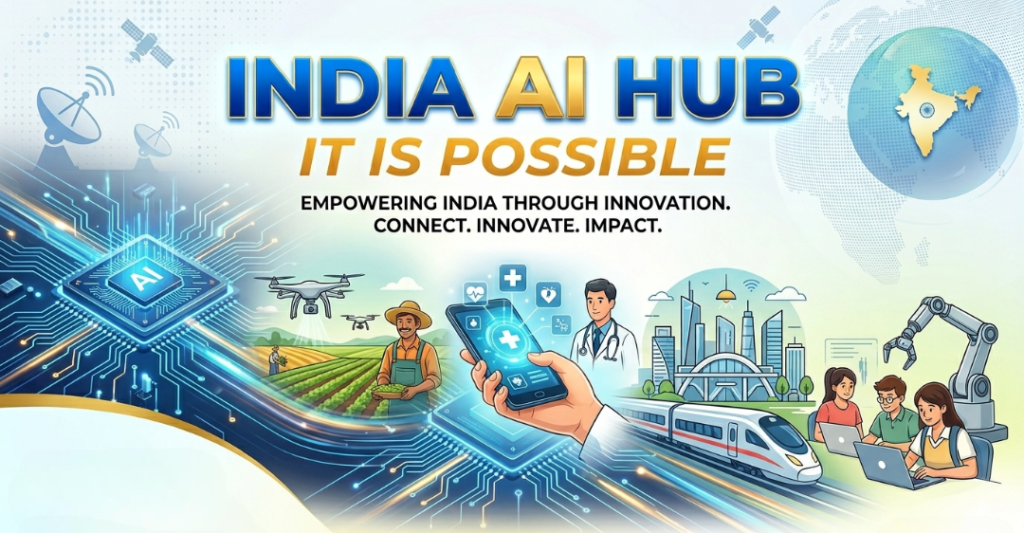
Many international technology companies view India as a key market for AI innovation, talent, research, and business expansion.
What Does This Mean for the Tech Industry?
The rapid growth of AI adoption is expected to bring several positive changes:
- Increased business productivity
- Improved customer experience
- Greater automation across industries
- Creation of new technology-focused jobs
- Faster growth of the digital economy
- Increased innovation and entrepreneurship
- Improved efficiency across multiple sectors
- Stronger global competitiveness for India

Mujtaba Ansari is a Software Engineer, Founder & CEO of The Tech Earth. He writes about technology, AI, software, cybersecurity, blogging, Health tech, Agri Tech and digital trends to help readers stay updated with the latest innovations.